-1.png "Starter - Blogger Template")
List Of Assets For Will Template
List Of Assets For Will Template - I have a piece of code here that is supposed to return the least common element in a list of elements, ordered by commonality: Result = [ 'hello' if x == 1 ]. In python you can assign values to both an individual item in a list, and to a slice of the list. It gets all the elements from the list (or characters from a string) but the last element. The json.loads(your_data) function can be used to convert it to a list. It looks like it's a little.
The json.loads(your_data) function can be used to convert it to a list. Colon in the list index, you are asking for a slice, which is always another list. The first, [:], is creating a slice (normally often used for getting just part of a list), which happens to contain the entire list, and thus is effectively a copy of the list. Result = [ 'hello' if x == 1 ]. The first way works for a list or a string;
Free Current Assets List PDF Word eForms

From collections import counter c = counte. 275 the json module is a better solution whenever there is a stringified list of dictionaries. The json.loads(your_data) function can be used to convert it to a list. Can we have list comprehension without a for loop and just if/else to put a single default value inside the list and later extend it.
Fixed Assets Inventory Table Excel Template And Google Sheets File For

Result = [ 'hello' if x == 1 ]. I have a piece of code here that is supposed to return the least common element in a list of elements, ordered by commonality: The json.loads(your_data) function can be used to convert it to a list. The second, list(), is using the actual. 275 the json module is a better solution.
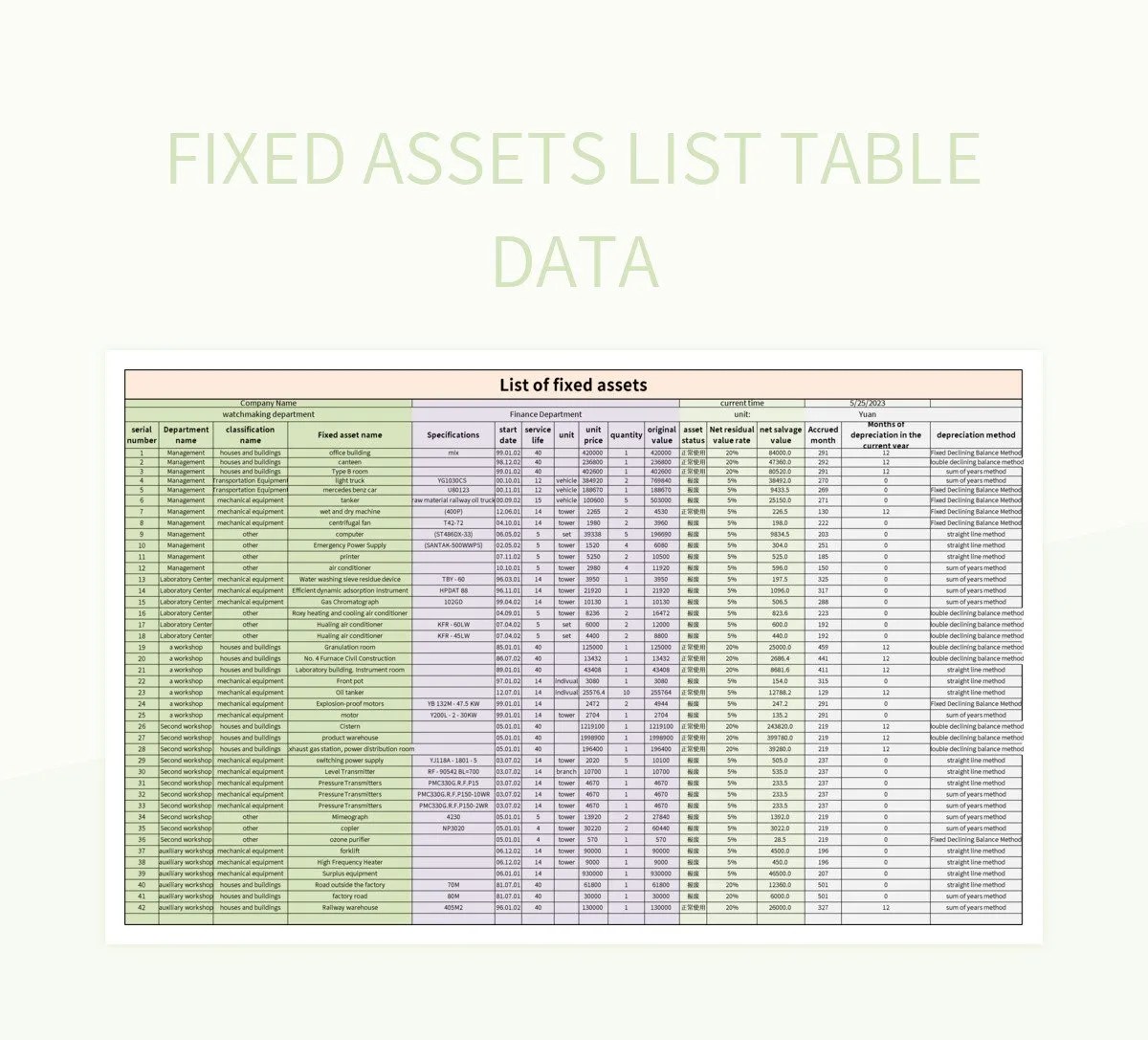
Fixed Assets List Table Data Excel Template And Google Sheets File For
The first, [:], is creating a slice (normally often used for getting just part of a list), which happens to contain the entire list, and thus is effectively a copy of the list. It looks like it's a little. The second, list(), is using the actual. The json.loads(your_data) function can be used to convert it to a list. It gets.
Assets template

Colon in the list index, you are asking for a slice, which is always another list. Official google search help center where you can find tips and tutorials on using google search and other answers to frequently asked questions. Result = [ 'hello' if x == 1 ]. Can we have list comprehension without a for loop and just if/else.
Asset Templates in PDF FREE Download

It gets all the elements from the list (or characters from a string) but the last element. Result = [ 'hello' if x == 1 ]. Official google search help center where you can find tips and tutorials on using google search and other answers to frequently asked questions. I have a piece of code here that is supposed to.
List Of Assets For Will Template - The json.loads(your_data) function can be used to convert it to a list. Other than that i think the only difference is speed: 275 the json module is a better solution whenever there is a stringified list of dictionaries. Colon in the list index, you are asking for a slice, which is always another list. I have a piece of code here that is supposed to return the least common element in a list of elements, ordered by commonality: Can we have list comprehension without a for loop and just if/else to put a single default value inside the list and later extend it if required?
The json.loads(your_data) function can be used to convert it to a list. The second, list(), is using the actual. 275 the json module is a better solution whenever there is a stringified list of dictionaries. The first way works for a list or a string; The first, [:], is creating a slice (normally often used for getting just part of a list), which happens to contain the entire list, and thus is effectively a copy of the list.
It Looks Like It's A Little.
It gets all the elements from the list (or characters from a string) but the last element. Official google search help center where you can find tips and tutorials on using google search and other answers to frequently asked questions. Result = [ 'hello' if x == 1 ]. Can we have list comprehension without a for loop and just if/else to put a single default value inside the list and later extend it if required?
Other Than That I Think The Only Difference Is Speed:
The json.loads(your_data) function can be used to convert it to a list. The second, list(), is using the actual. The first way works for a list or a string; Colon in the list index, you are asking for a slice, which is always another list.
275 The Json Module Is A Better Solution Whenever There Is A Stringified List Of Dictionaries.
The second way only works for a list, because slice assignment isn't allowed for strings. The first, [:], is creating a slice (normally often used for getting just part of a list), which happens to contain the entire list, and thus is effectively a copy of the list. From collections import counter c = counte. I have a piece of code here that is supposed to return the least common element in a list of elements, ordered by commonality: